
Quick Answer: Can You Return Car Parts That Don’t Fit?
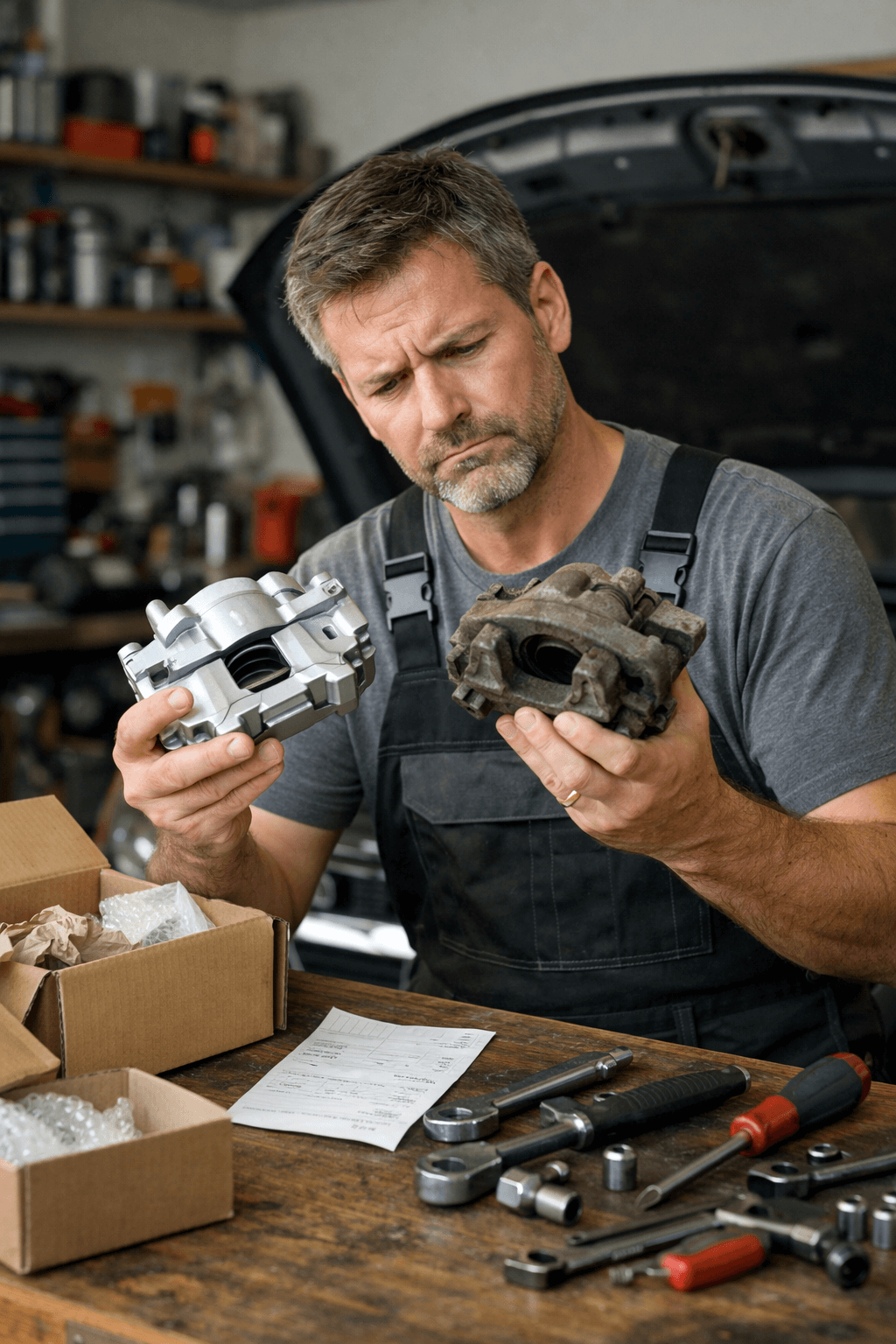
Yes, most auto parts retailers allow returns of parts that don’t fit, provided they’re unused, undamaged, and returned within the specified timeframe (typically 30-90 days). You’ll need the original receipt, packaging, and the part must not be installed or modified. Some restrictions apply to electrical components, special orders, and clearance items.
Understanding Auto Parts Return Policies: The Retail Landscape
The auto parts industry has evolved significantly over the past decade. Unlike clothing or electronics, car parts present unique challenges—they’re often application-specific, can be contaminated by installation attempts, and involve safety-critical systems. Here’s what I’ve learned works across the industry.
Major Retailer Return Policies Compared
| Retailer | Standard Return Window | Receipt Required? | Restocking Fee | Electrical Parts | Special Orders |
|---|---|---|---|---|---|
| AutoZone | 90 days (most items) | Preferred, not always required | None | Returns accepted if unopened | Typically non-returnable |
| Advance Auto Parts | 45 days | Yes | None for Speed Perks members | Must be unopened | Case-by-case basis |
| O’Reilly Auto Parts | 30 days (60 for online) | Yes, or lookup by card | None | Unopened only | Generally non-returnable |
| NAPA Auto Parts | 30 days | Yes | Possible on special items | Unopened electronics only | Dealer discretion |
| Amazon | 30 days | Order details required | None | Unopened/unused | Same as standard |
| eBay | Seller-dependent (30 days typical) | Transaction record | Varies by seller | Varies | Varies |
What “Unused” Actually Means
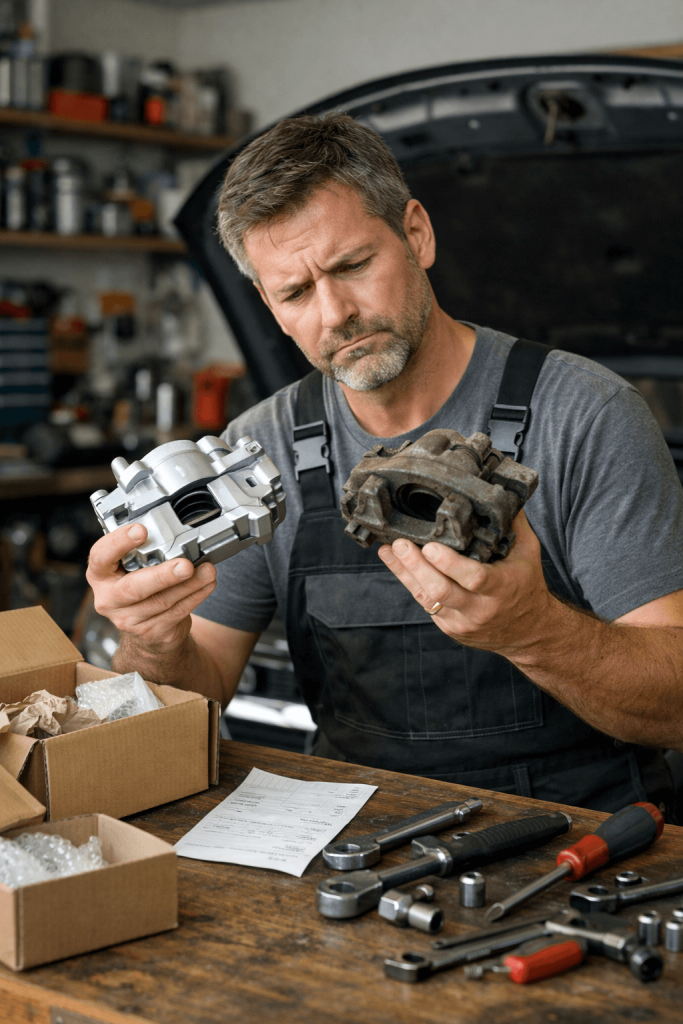
Here’s where many customers trip up. “Unused” doesn’t just mean “I didn’t fully install it.” In my experience, these conditions void most return privileges:
- Any installation attempt, even if unsuccessful
- Test-fitting that leaves marks or scratches
- Opening sealed electrical components
- Removing protective coatings or caps
- Breaking factory seals on fluids or chemicals
- Missing hardware or accessories from the package
I once had a customer try to return brake rotors with visible tool marks from attempted installation. Even though they “didn’t fit,” the return was denied because the parts showed use. The lesson? If you suspect a fitment issue, stop immediately before making any marks.
In-Store vs. Online Returns: Critical Differences
In-Store Purchases
When you buy parts at a physical store, returns are generally straightforward:
Advantages:
- Immediate inspection and approval
- Instant refund or exchange
- Staff can verify fitment for replacement part
- Core charges settled on the spot
Process:
- Bring the part in original packaging
- Present receipt (or card used for purchase)
- Explain the fitment issue
- Staff verifies condition
- Receive refund or exchange
Online Purchases (Including Amazon, eBay, and Retailer Websites)
Online returns require more steps but often have longer windows:
Amazon Auto Parts:
- 30-day return window (sometimes extended to 90 days)
- Free return shipping on most items sold by Amazon
- Print return label from your account
- Pro tip: Amazon often provides instant refunds once tracking shows the item in transit
Retailer Websites (AutoZone.com, AdvanceAutoParts.com, etc.):
- Can usually return to store for immediate processing
- Mail returns typically take 7-14 days to process
- May need to pay return shipping unless defective
- Keep all documentation until refund posts
eBay and Third-Party Marketplaces:
- Return policies vary by seller
- eBay Money Back Guarantee provides protection
- “Item not as described” claims work if wrong part sent
- Private sellers may refuse returns—check before buying
The Electrical Parts Exception: Why Electronics Get Special Treatment
If there’s one thing that frustrates customers most, it’s the electrical parts policy. But there’s solid reasoning behind it.
Why Electrical Parts Have Strict Return Policies
During my retail management years, electrical component returns accounted for the highest rate of fraudulent returns. Here’s why policies are strict:
- Diagnostic Testing: Once connected to a vehicle’s electrical system, you can’t prove the part wasn’t damaged by installation
- Internal Damage: Electrical components can fail from improper handling without visible external damage
- High Return Rate Abuse: Some customers would “rent” diagnostic tools by buying and returning
- Warranty vs. Return Confusion: Many electrical failures are covered by manufacturer warranty, not store returns
What Qualifies as “Electrical Parts”
- Alternators and starters
- ECU/PCM modules
- Sensors (O2, MAF, throttle position, etc.)
- Ignition coils and control modules
- Batteries (different policy—see below)
- Wiring harnesses
- Relays and solenoids
Exception: If the electrical part is still in unopened, factory-sealed packaging, most retailers will accept returns within the standard window.
Battery Return Policies
Batteries deserve special mention because they operate differently:
- Most retailers offer 30-day free exchange on defective batteries
- Warranty periods (1-3 years) cover failures after 30 days
- Core charge refunded when old battery returned
- Must pass load test to qualify for warranty replacement
- “Doesn’t fit” returns accepted if truly unused (terminals show no connection marks)
Special Order Parts: The Non-Returnable Category
Special orders are the trickiest category. Here’s what qualifies and why returns are problematic:
What Makes a Part “Special Order”
- Not stocked locally; ordered from warehouse
- Custom-ordered for specific VIN
- High-value or low-demand items
- Paint-matched body parts
- Performance/aftermarket upgrades
- Parts for classic or rare vehicles
Why Special Orders Are Usually Final Sale
Retailers operate on thin margins. A special-ordered part for a 1987 Buick Grand National might sit in inventory for years if returned. That’s why most stores make exceptions only for:
- Manufacturer defects (warranty claim)
- Retailer error (wrong part sent)
- Documented damage during shipping
Before ordering special parts:
- Triple-check part numbers against VIN
- Verify fitment with multiple sources
- Ask about restocking fees (typically 15-25%)
- Understand the final sale terms
Core Charges and How They Affect Returns
Core charges confuse many customers, but they’re simple once explained.
What Is a Core Charge?
A refundable deposit (typically $15-$100) charged on rebuildable parts like:
- Alternators and starters
- Brake calipers
- Steering racks
- A/C compressors
- Water pumps
How it works:
- Buy new alternator for $150 + $25 core charge = $175 total
- Return old alternator within 30-90 days
- Get $25 core refund
Core Charges and Returns
If you return a part that included a core charge:
- You receive refund for the part price
- You must return the old core OR pay the core charge
- If you haven’t installed the new part, you still keep the new core
Example: Bought alternator but it doesn’t fit. You return it unopened. You’ll get the full refund but won’t have a core to return (because you never installed it). You’re not charged the core fee because you’re returning the new part with its core intact.
Consumer Rights and Legal Protections
While return policies are contractual agreements, certain consumer protections apply.
Implied Warranty of Merchantability
Under the Uniform Commercial Code (adopted by all U.S. states), products sold must be:
- Fit for their ordinary purpose
- Of average acceptable quality
- Properly packaged and labeled
What this means for auto parts: If a retailer sells you a part claiming it fits your vehicle, and it doesn’t due to mislabeling or incorrect fitment data, you have legal grounds for return even if they claim “all sales final.”
State-Specific Protections
Some states offer additional protections:
- California: Robust consumer protection laws; “restocking fees” over 20% may be challenged
- New York: Deceptive practices laws protect against misleading fitment claims
- All states: Fraud claims if a seller knowingly sells wrong parts
Manufacturer Warranty vs. Store Return Policy
These are separate and often confused:
Return Policy:
- Store’s agreement to take back merchandise
- Typically 30-90 days
- Requires unused condition
- Covers buyer’s remorse, wrong part, doesn’t fit
Manufacturer Warranty:
- Covers defects in materials or workmanship
- Often 1-3 years (lifetime for some parts)
- Requires the part to be installed
- Covers failures, not fitment issues
Key distinction: If a part doesn’t fit, that’s a return policy issue. If it fails after installation, that’s a warranty issue.
What to Do When a Store Refuses Your Return
I’ve mediated countless return disputes. Here’s the escalation path that actually works:
Step 1: Understand Why It Was Denied
Common denial reasons:
- Shows signs of installation
- Missing packaging or components
- Past return window
- Classified as electrical/special order
- No receipt and purchase can’t be verified
Step 2: Ask for Manager Review
Store associates sometimes apply policies incorrectly. A manager has discretion to:
- Override minor policy violations
- Offer store credit instead of refund
- Accept partial restocking fee
- Document manufacturer defects for warranty claim
Script that works: “I understand the policy concern. This part genuinely doesn’t fit my vehicle as specified in your system. Can we find a solution? I’m a regular customer and would like to continue shopping here.”
Step 3: Contact Corporate Customer Service
National chains value customer retention. Corporate offices can authorize returns that stores deny:
- AutoZone: 1-800-288-6966
- Advance Auto Parts: 1-877-238-2623
- O’Reilly Auto Parts: 1-800-755-6759
- NAPA: 1-877-627-2468
Step 4: Credit Card Chargeback (Last Resort)
If you paid by credit card and the retailer refuses a legitimate return:
- File a dispute with your card issuer
- Claim: “Merchandise not as described” or “Services not rendered”
- Provide documentation: receipt, fitment specifications, photos
- Most disputes resolved within 60 days
Warning: Use chargebacks sparingly. Retailers may ban customers who file multiple disputes.
Step 5: Manufacturer Warranty Route
If the store won’t take it back but the part is defective or doesn’t match specifications:
- Contact the part manufacturer directly
- Provide purchase proof and VIN
- Many manufacturers offer direct warranty support
- They may send replacement or authorize store return
How to Avoid Return Issues: Expert Prevention Tips
After processing thousands of returns, these practices prevent 90% of fitment problems:
Before You Buy
1. Use VIN-Based Fitment Lookups
- Don’t rely on year/make/model alone
- VIN accounts for mid-year changes, trim packages, engine swaps
- Most retailer websites have VIN decoders
- Dealership parts departments can verify exact part numbers
2. Cross-Reference Multiple Sources
- Check manufacturer part numbers
- Use RockAuto, PartsGeek, and OEM sites to verify
- Join vehicle-specific forums for confirmation
- Look for common fitment issues reported by others
3. Inspect the Part Before Leaving the Store
- Open the box if possible
- Verify part number matches receipt
- Check for obvious damage
- Compare to old part if you brought it
4. Understand Your Vehicle’s Variations
- Some model years have multiple alternator options based on amperage
- Brake pad sets vary by caliper type
- Suspension components differ by 2WD/4WD
Photographing for Protection
Take photos before and during any return:
- Unopened packaging
- Part condition
- Any defects or fitment issues
- Comparison to original part
These photos prove condition if disputes arise.
The “Test Fit” Dilemma
Many DIY mechanics want to test-fit before committing. Here’s how to do it without voiding returns:
Safe test-fitting:
- Visual comparison to old part (no installation)
- Holding part in position without bolting
- Measuring mounting points without contact
Unsafe test-fitting:
- Threading bolts even partially
- Connecting electrical connectors
- Removing protective coatings to check clearance
- Using the part to take measurements that leave marks
When in doubt, ask the store to verify fitment before you leave. Most will double-check part numbers on request.
Frequently Asked Questions
Can I return a car part after installing it?
No, most retailers do not accept returns on installed parts. Once a part has been installed—even unsuccessfully—it’s considered used and ineligible for return under standard policies. However, if the part is defective, you may be covered under the manufacturer’s warranty instead of the store’s return policy. Warranty claims typically require the part to be installed.
Can I return auto parts without a receipt?
It depends on the retailer. AutoZone and some other chains can look up purchases by credit/debit card, phone number, or loyalty program account. Without any purchase verification, most stores will deny returns or offer only store credit at the current sale price. Always save receipts for auto parts—keep a photo on your phone as backup.
How long do I have to return car parts that don’t fit?
Return windows vary by retailer: AutoZone offers 90 days for most parts, Advance Auto Parts allows 45 days, O’Reilly provides 30 days for in-store (60 for online), and NAPA gives 30 days. Online marketplaces like Amazon typically allow 30 days. Always check the specific policy at purchase, as some parts (electrical, special orders) have different timeframes.
Can I return used brake pads or rotors?
No, brake pads and rotors cannot be returned once installed or used. This is a safety policy—retailers cannot resell brake components that may have been contaminated or improperly installed. However, if brake pads are unopened and in original packaging with no signs of installation, they can be returned within the standard window.
Are electrical parts refundable if they don’t fix my problem?
Generally no. Electrical parts like alternators, starters, sensors, and modules can only be returned if they’re unopened in factory-sealed packaging. Once opened or installed, they’re typically non-returnable even if they don’t solve your vehicle’s problem. This protects retailers from diagnostic tool “rentals.” If an electrical part is defective, it’s covered under manufacturer warranty, not store returns.
What if I ordered the wrong part online and already opened it?
For online orders, return eligibility depends on the part’s condition and the retailer’s policy. If you opened the package but didn’t install or mark the part, many retailers will still accept returns within their window. Amazon is generally more lenient than other retailers. If you’ve already opened sealed electrical components, returns are unlikely. Contact customer service immediately—the sooner you act, the better your chances of a favorable resolution.
Conclusion
Returning car parts that don’t fit is generally possible, but success hinges on three critical factors: acting within the return window, keeping parts uninstalled and in original packaging, and understanding retailer-specific policies. Major chains like AutoZone, O’Reilly, and Advance Auto Parts accept returns on unused parts, though electrical components and special orders face strict limitations. Always verify fitment using VIN lookups before purchase, save your receipts, and document part condition with photos. If a return is denied, escalate to management or corporate customer service. Remember, prevention through careful verification beats dealing with returns—but when fitment issues occur, you’re protected if you follow these guidelines.