
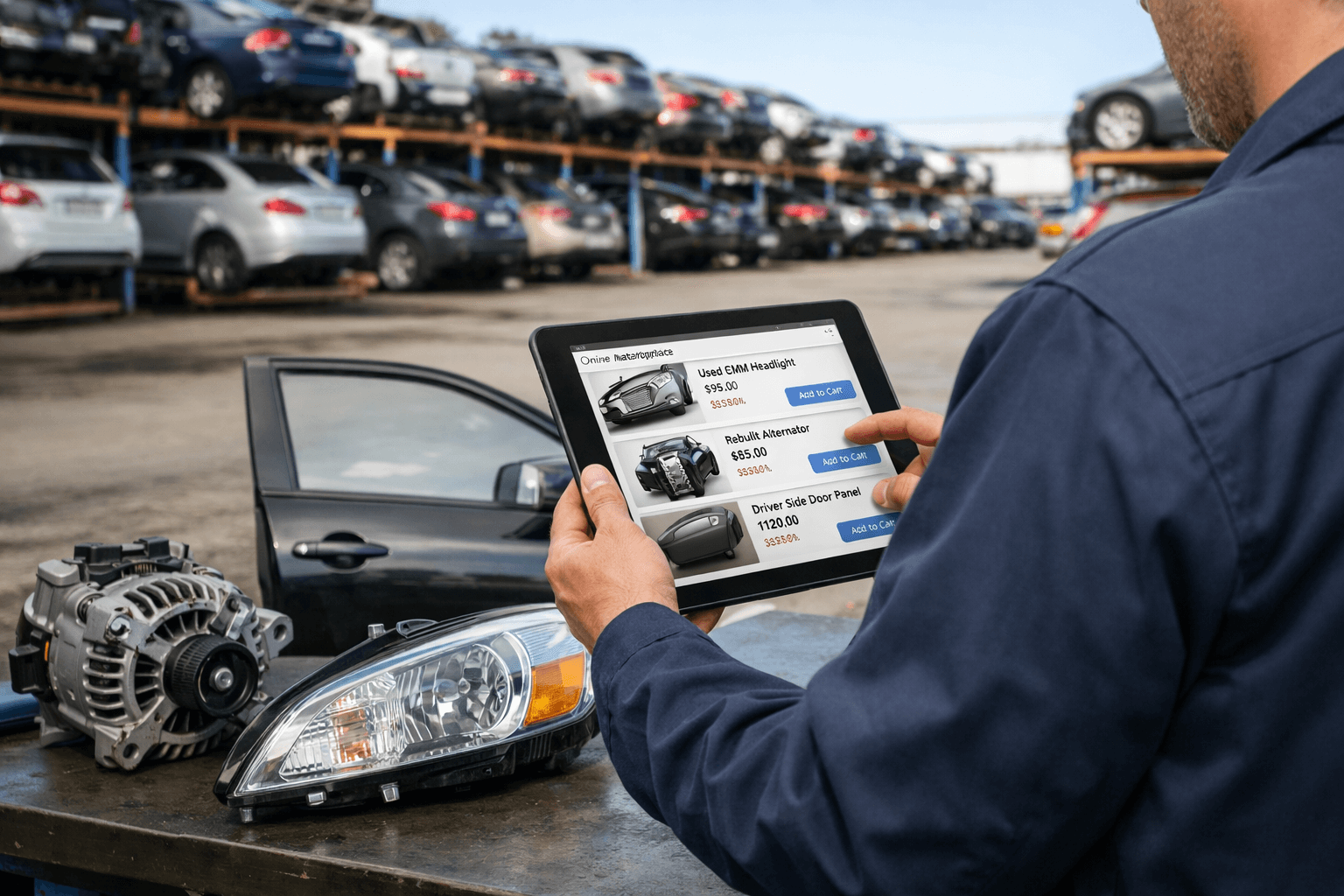
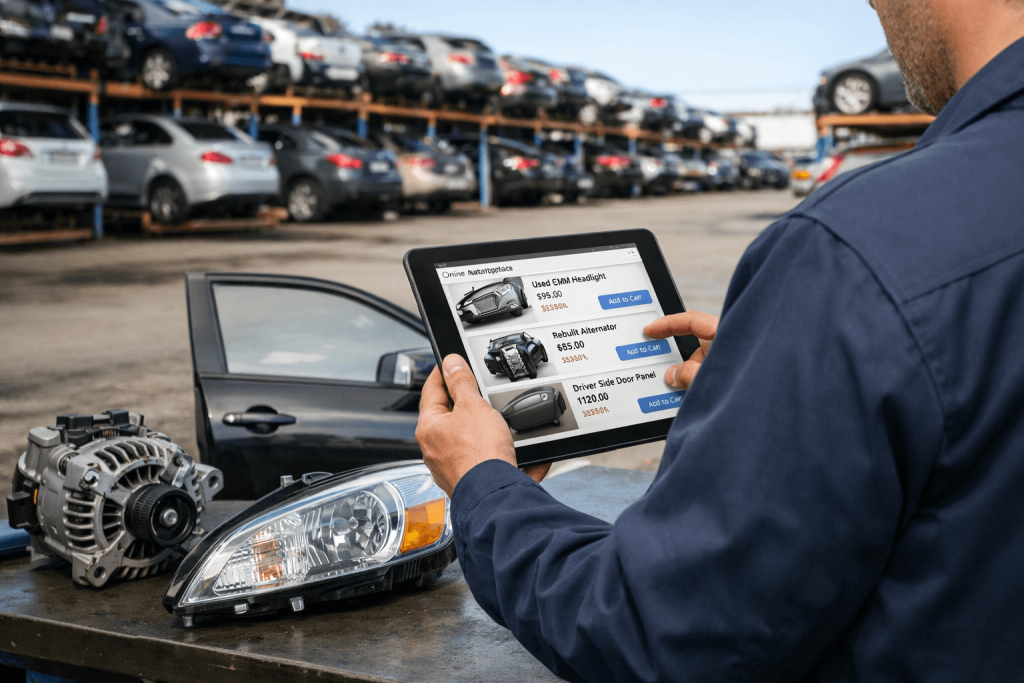
Yes, you can absolutely find used car parts online—and millions of car owners do it every day to save money on repairs while getting quality OEM components. Whether you’re hunting for a replacement engine, a headlight assembly, or interior trim pieces, the internet has transformed how people source recycled auto parts from salvage yards, online junkyards, and peer-to-peer marketplaces.
The real question isn’t if you can find them, but where to look and how to buy safely. This guide draws on real-world repair experience to help you navigate the used parts market confidently.
Why Buy Used Car Parts Online?
Most people turn to used auto parts for three reasons:
Cost savings – A used alternator might cost $75 instead of $300 new. Used engines and transmissions can save you thousands compared to dealer prices.
Availability – Discontinued parts for older vehicles often only exist in salvage yards. A 15-year-old Subaru door panel or Honda headlight assembly? You’ll likely find it used before you find it new.
OEM quality – Used original equipment manufacturer (OEM) parts often outlast cheap aftermarket alternatives. A genuine Toyota radiator from a salvage yard typically beats a no-name replacement from a discount retailer.
Where to Find Used Car Parts Online
Online Auto Parts Marketplaces
eBay Motors remains the largest platform for used car parts. You’ll find everything from used transmission parts to small trim pieces, sold by both commercial sellers and individual car owners. The sheer volume means competitive pricing, but buyer protection is limited to eBay’s policies.
Car-Part.com searches inventory from over 7,000 auto recyclers nationwide. Enter your vehicle’s year, make, and model, and it’ll show you available parts with pricing from nearby salvage yards. Many yards offer shipping or local pickup.
LKQ Pick Your Part and Pull-A-Part operate self-service junkyards with online inventory tools. You can see which vehicles are in their yards before you visit, though you’ll typically pull the part yourself.
Specialized Auto Recyclers and Salvage Yard Websites
Professional auto salvage operations have moved online with searchable databases. Companies like 1-800-Salvage, All-Star Auto Parts, and regional recyclers maintain websites where you can request quotes for specific components.
These businesses usually:
- Test electrical parts before selling
- Offer limited warranties (30-90 days is common)
- Clean and photograph parts
- Ship nationally
Peer-to-Peer and Community Platforms
Facebook Marketplace and Craigslist connect you directly with people parting out vehicles. You’ll find incredible deals, but there’s zero buyer protection and minimal recourse if something goes wrong.
Reddit communities (r/MechanicAdvice, r/Cartalk) and brand-specific forums often have classified sections where enthusiasts sell parts. These communities tend to be more trustworthy because reputation matters.
Types of Used Car Parts You Can Buy Online
Mechanical Components
Engines and transmissions – These are high-dollar items where used parts make the most financial sense. A used engine with 80,000 miles might cost $1,200 versus $4,000+ for a rebuilt unit. Reputable sellers provide mileage verification and compression test results.
Alternators, starters, AC compressors – Common failure items that are easy to swap. Many salvage yards test these before selling.
Suspension parts – Control arms, struts, and steering components are available used, though many mechanics recommend new for safety-critical items.
Body and Exterior Parts
Bumpers, fenders, hoods, doors – Perfect candidates for used parts, especially if you’re matching paint on an older car. Shipping costs can be high due to size.
Headlights and taillights – Used OEM lighting often has clearer lenses than cheap aftermarket replacements that yellow quickly.
Mirrors, grilles, trim pieces – Small parts that are frequently discontinued. Online junkyards excel here.
Interior Components
Seats, door panels, dashboards – Color and trim matching is crucial. Used parts let you maintain factory appearance.
Infotainment systems, climate controls – Electronics that fail but are expensive new. Compatibility is critical—VIN decoding helps ensure the right match.
Airbags and safety components – Approach with extreme caution. Many reputable sellers won’t sell used airbags due to liability, and for good reason.
Pros and Cons of Buying Used Car Parts Online
Advantages
Significant cost savings – You’ll typically pay 40-70% less than new parts, sometimes more for expensive items like used transmission parts or engines.
Access to discontinued parts – Manufacturers stop producing parts for older vehicles. The used market becomes your only option for OEM components.
Environmental benefits – Recycling functional parts from salvage vehicles reduces waste and the environmental impact of manufacturing new components.
OEM quality at aftermarket prices – You get factory parts without factory prices, often with better longevity than budget aftermarket alternatives.
Disadvantages and Risks
Unknown history – You rarely know how the previous owner maintained the vehicle or if the part was failing before removal.
Limited warranties – Most used parts come with 30-90 day warranties at best. Compare this to 1-3 years for new parts.
Compatibility challenges – Even the same model year can have multiple versions of a part. Mid-year changes, trim levels, and option packages create confusion.
No returns on electrical parts – Many sellers have strict no-return policies on electronics, even if they don’t work.
Shipping damage – Large or fragile parts (glass, bumpers, transmissions) can arrive damaged, leading to return headaches.
How to Buy Used Car Parts Safely: Expert Tips
Start With VIN Decoding
Your Vehicle Identification Number contains vital compatibility information. The 10th digit indicates model year, but more importantly, your VIN helps sellers confirm that their part matches your vehicle’s exact specifications.
Many professional recyclers use VIN lookup tools to verify compatibility before selling. Provide your VIN when requesting quotes.
Verify the Seller
For commercial sellers:
- Check Better Business Bureau ratings
- Read recent reviews on Google and social media
- Look for businesses that have been operating 5+ years
- Verify they offer warranties in writing
For individual sellers:
- Ask why they’re selling the part
- Request photos showing the part installed (proves it’s real and works)
- Meet in public places if buying locally
- Be wary of prices that seem too good to be true
Ask Specific Questions
Don’t just ask “Does it work?” Professional buyers ask:
- What’s the mileage on this part?
- Why was it removed from the vehicle?
- Do you have compression test results (for engines)?
- Has it been tested? How?
- What’s your return policy, specifically?
- Can you provide photos showing the casting numbers or part numbers?
Understand Warranty and Return Policies
A legitimate seller should clearly state:
- Warranty period (30, 60, or 90 days is standard)
- What the warranty covers (often just replacement, not labor)
- Return window and restocking fees
- Who pays return shipping
Get everything in writing. Screenshot conversations, save emails, and print policies before purchasing.
Inspect Condition Carefully
Request detailed photos showing:
- Overall condition from multiple angles
- Mounting points and bolt holes (check for cracks or damage)
- Electrical connectors (look for corrosion or broken tabs)
- Casting numbers or part numbers (for verification)
For engines and transmissions, ask for:
- Compression test results
- Video of the engine running (if available)
- Photos of the oil pan (check for metal shavings)
Research Fair Pricing
Check multiple sources before buying. A used part that’s only 20% cheaper than new probably isn’t worth the risk. If you’re not saving at least 40%, consider buying new with a warranty.
Price comparison tip: Search the same part on eBay, Car-Part.com, and at least two local salvage yards. This gives you a realistic market range.
Used vs New vs Aftermarket Parts: When Each Makes Sense
Choose Used When:
- The part is expensive new (engines, transmissions, transfer cases)
- You need an OEM part for an older vehicle
- The part is simple and testable (alternators, wheels, interior trim)
- Your vehicle has high mileage and you’re keeping it short-term
- The part is discontinued
Choose New When:
- It’s a safety-critical component (brake calipers, airbags, seatbelts)
- The part is wear-prone (timing belts, water pumps, brake pads)
- You’re keeping the vehicle long-term
- The price difference is minimal
- You want a multi-year warranty
Choose Aftermarket When:
- You need basic functional parts (filters, basic sensors)
- The OEM part has known defects or improvements exist
- You’re on a tight budget but new is important
- Used options are scarce
Real-world example: For a 2010 Honda Accord, a used OEM alternator ($75-100) typically outlasts a cheap aftermarket unit ($90 new) while costing less. But for that same car, buying new brake rotors ($50 each) makes more sense than used ones that may be warped or worn.
Common Mistakes to Avoid When Buying Used Car Parts Online
Skipping Compatibility Verification
“It’s for a 2015 Civic” isn’t specific enough. Civics came in LX, EX, EX-L, Touring, and Si trim levels, each with different engines, transmissions, and option packages. Always verify the specific part number or VIN-decode before purchasing.
Ignoring Seller Reviews and Ratings
A seller with 95% positive feedback over 500 transactions is vastly different from one with 100% feedback but only 3 sales. Read negative reviews specifically—they reveal how sellers handle problems.
Buying Critical Safety Parts Used
Airbags, seatbelts, and structural crash components should almost always be new. These parts may have hidden damage from previous collisions, and failure could be catastrophic.
Not Calculating Total Cost
A $200 transmission sounds great until you add $150 shipping and discover you need a $75 torque converter that wasn’t included. Always ask what’s included and calculate final delivered cost.
Choosing Price Over Seller Reliability
The cheapest option from a sketchy seller on Facebook Marketplace often costs more when it doesn’t work and you have to buy again. Sometimes paying $30 more to a reputable business saves $200 in headaches.
Installing Without Inspection
Even quality used parts can have issues. Before installing, especially for mechanical components:
- Physically inspect for cracks, leaks, or damage
- Test electrical components if possible
- Compare carefully to your old part
Some mechanics refuse to install customer-supplied used parts because of liability. Confirm your mechanic will install it before you buy.
Frequently Asked Questions
Are used car parts reliable?
It depends on the part, seller, and vehicle history. Used OEM parts from reputable recyclers with warranties can be very reliable—many mechanics prefer them over cheap aftermarket alternatives. Mechanical parts from low-mileage donor vehicles often have years of life left. However, used parts have no guaranteed lifespan. Buy from businesses that test parts and offer at least a 30-day warranty.
Is it safe to buy used engines online?
Yes, but do your homework. Reputable engine sellers provide mileage verification, compression test results, and 90-day warranties minimum. Ask for the VIN of the donor vehicle and verify mileage through Carfax if possible. Expect to pay $1,000-$3,000 for a used engine versus $4,000-$7,000 for remanufactured. Installation labor is the same either way, so factor that into your decision.
Can I return used car parts if they don’t fit?
This varies significantly by seller. Most reputable businesses accept returns within 30 days if the part is uninstalled and undamaged, though you may pay a 15-20% restocking fee plus return shipping. Many salvage yards have strict no-return policies on electrical parts. Always clarify the return policy in writing before purchasing.
How do I know if a used part will fit my car?
Provide your complete VIN to the seller, not just year/make/model. Cross-reference part numbers using sites like RockAuto or your dealer’s parts department. For complex parts like ECUs or infotainment systems, verify the part number matches exactly—even within the same model year, there can be dozens of variations.
Are salvage yard parts covered by warranty?
Professional auto recyclers typically offer 30-90 day warranties covering replacement if the part is defective. The warranty rarely covers labor costs to install or diagnose. Self-service junkyards and individual sellers typically offer no warranty. Always get warranty terms in writing.
What used car parts should I avoid buying?
Avoid used airbags, seatbelts, timing belts, brake pads/rotors, and structural crash components. Also be cautious with used tires (unknown age and storage conditions), catalytic converters (may be clogged), and oxygen sensors (wear items). These parts are either safety-critical, wear-prone, or hard to assess condition.
Conclusion
Buying used car parts online is a smart, cost-effective way to maintain your vehicle without breaking the bank. Whether you’re sourcing a replacement engine from a reputable auto recycler or hunting for discontinued trim pieces on eBay Motors, the online marketplace puts thousands of quality OEM parts at your fingertips. Success comes down to doing your homework—verify compatibility with your VIN, buy from sellers with solid reputations and warranties, and avoid safety-critical components. When approached carefully, used auto parts deliver genuine savings while maintaining the quality and fit your vehicle deserves. Shop smart, ask questions, and you’ll find exactly what you need.